
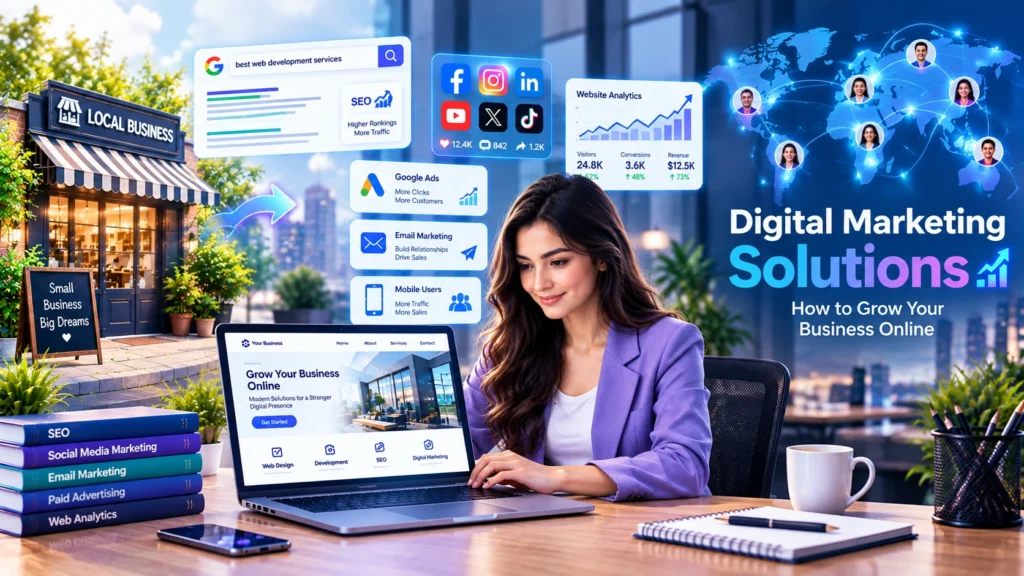
Running a business now looks nothing like it did a decade ago. People don’t rely on shopfronts, newspapers, or word-of-mouth recommendations as much as they used to. When they want something—a plumber, new shoes, a dog walker they just hop on Google, scroll through social media, look up reviews, or type their question straight into a search box.
That shift created a huge opportunity now, even the smallest business can reach customers from another city, country, or halfway across the world without opening an office everywhere. But there’s a catch: the internet is crowded. Everyone’s there, shouting for attention, and just having a website won’t get you noticed.
That’s where digital marketing comes in.
Digital marketing covers all the ways you can reach people online—boosting your visibility, attracting new customers, building trust, and, of course, making sales. There isn’t a one-size-fits-all trick; the right approach depends on your business, your goals, and who you want to reach.
So what are digital marketing solutions, really?
And how do they help you grow online?
Let’s break it down.
What Are Digital Marketing Solutions?
Digital marketing solutions are just different ways and services for getting your business, product, or service in front of people online.
Instead of leaning on one single method, digital marketing uses a bunch of different channels. Picture this: someone sees your name in a Google search, then stumbles across your Instagram post, reads a blog on your website, or finds a customer review. All these touchpoints can connect and guide them toward finally buying from you.
Here are some of the key areas of digital marketing:
- SEO (Search Engine Optimization)
- Content marketing
- Social media marketing
- Email marketing
- Pay-per-click ads
- Online reputation management
- Video marketing
- Conversion rate optimization
- Analytics and tracking
The trick isn’t piling up every tactic you read about. Good marketing is about choosing the right channels for your business and focusing on what actually works.
Why Does Digital Marketing Matter for Businesses?
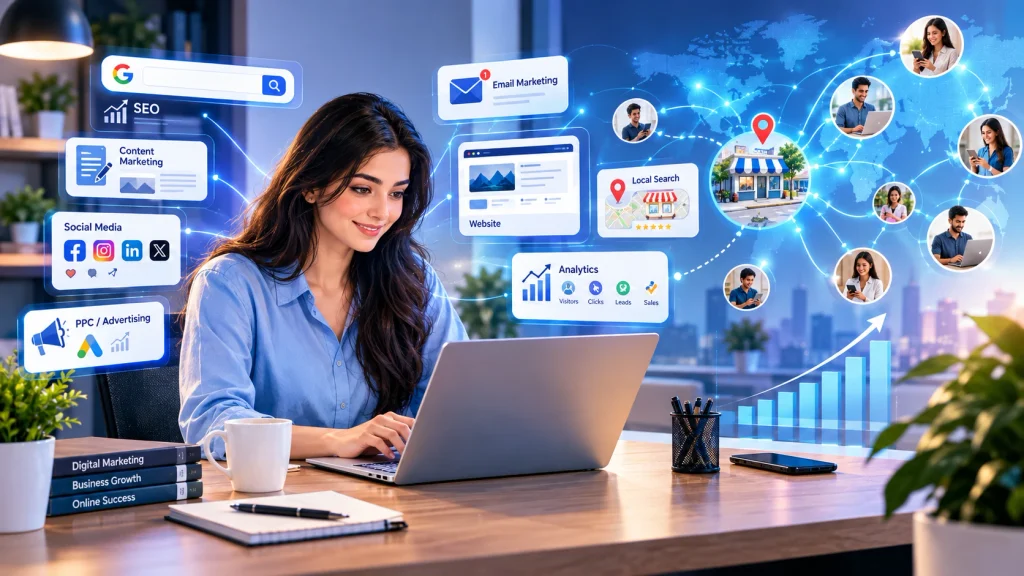
Think about how you shop or search for services now.
Shopping for a laptop? You start with reviews. Need a plumber? You search “plumber near me.” Want to learn to play guitar? You’re on YouTube.
Your customers hunt for businesses in the same way. That means if your business isn’t online where they’re looking, potential customers may never find you.
Digital marketing helps you:
- Reach more people far beyond your street or city
- Share the knowledge and grow your brand
- Bring more visitors to your website
- Get leads who might become future customers
- Nurture relationships (not just sales)
- Be there when they need answers
- Promote your products or services
- Understand what your customers do, want and like.
- Boost sales
Here’s another thing: tracking results is easier online. Billboards and flyers can’t tell you much about who saw them or what those people did next. With digital marketing, you can measure everything—website visits, clicks, time spent, downloads, sales. All that data helps you figure out what’s working and what isn’t, so you don’t waste time (and money) guessing.
1. SEO Helps People Find Your Website
Search engine Optimization SEO means optimizing your website so that Google and humans can quickly understand what yours page is about
Let’s say you run an accounting business. Someone types “small business accounting services” into Google. If your site has a page that actually answers their questions and follows good SEO, it has a better chance of appearing prominently in search results.
But SEO isn’t just stuffing keywords everywhere. It’s about:
- Publishing useful content
- Writing clear titles and headings
- Making your site work on phones
- Speeding up your site
- Adding internal links
- Fixing technical glitches
- Earning backlinks from trusted sites
- Understanding what people are searching for.
SEO takes time. Think of it like building a reputation—consistent effort matters. Keep creating good content and improving your site, and over time, you’ll have a strong foundation online.
2. Content Marketing Builds Trust
Most people aren’t ready to buy the first time they see your business. They have questions—or maybe they’re just curious.
Content marketing helps them during that research phase. You create helpful blog posts, guides, videos, FAQ pages, or case studies that answer real questions.
Picture a company selling home security systems. Instead of a cheesy “Buy now!” ad, imagine you see articles like:
- How Does a Home Security System Work?
- Keeping Your House Safe While Traveling
People searching those topics aren’t ready to buy yet, but when your business helps them out, you start building trust. The more useful you are, the more likely they’ll come back—and maybe buy from you down the road.
3. Social Media Keeps Your Business Connected
Social media is not a place for cat videos and vacation photos. It’s a place where businesses and customers can connect and interact. People scroll for ideas, entertainment, quick answers, or something interesting to share.
Your business can use social media to:
- Give quick tips
- Share a peek behind the scenes
- Show off how your product works
- Highlight customer stories or reviews
- Share short, educational videos
- Announce news or updates
Every platform attracts a different crowd. Selling B2B? You’ll probably use LinkedIn more. Got a lifestyle brand? Instagram or TikTok is a better fit for your audience. There’s no one-size-fits-all; pick the platform where your audience hangs out.
4. Paid Advertising Can Get You Seen Faster
Organic marketing like SEO and content can take a while to gain traction. Want to reach your audience faster? Paid advertising does the trick.
With pay-per-click (PPC) ads, you can put your message right in front of the audience you choose—on Google, Facebook, Instagram, and other networks.
Let’s say you’re selling office chairs. You can run ads that only appear when someone in your area searches for “buy office chair.”
The main benefits of PPC is its targeting options. You can pick people by location, interests, what they’re searching for, or even age group.
But be smart. If you cast the net too wide or go after the wrong crowd, you end up spending money with little to show for it. Always watch your metrics: clicks, conversions, and the actual sales you get for your ad dollars.
5. Email Marketing Builds Relationships
It’s one thing to get visitors to your site—it’s another to keep them engaged. That is where email marketing comes into play
Let’s say an online store collects email addresses. They can send subscribers useful guides, special offers, new product alerts, or tips tailored to their interests.
The secret is respect. Don’t flood inboxes with junk—send messages people actually want to open. When done right, email marketing is a powerful tool for staying top of mind with customers and fans.
6. A Good Website Is the Foundation
All these marketing efforts—ads, emails, shares, search—lead people back to your website. If your site is slow,difficult to use, or confusing, visitors may leave quickly.
Your website should be designed to give visitors a clear understanding of:
- Who you are
- What you offer
- Who your services are for
- Why they should trust you
- How they can contact you
- What they should do next
Fast, simple, mobile-friendly websites provide a better user experience. Don’t forget clear menus and useful information—the design matters less than how easy it is to use.
7. Local Marketing Can Boost Small Businesses
Not every business needs to reach a global audience. If you’re a local shop, dentist, electrician, or restaurant, you want customers in your neighborhood.
Local digital marketing focuses on showing up when people nearby are searching. You do this by:
- Optimizing your Google Business Profile
- Creating city or neighborhood-specific pages on your website
- Encouraging real customers to leave reviews
- Making sure your business info is correct everywhere online
- Publishing content about local events or topic
The idea? Make it easy for people around you to find—and trust—your business.
8. Analytics Tells You What Works
If you’re creating content or running ads, how do you know if it’s paying off? That’s where analytics comes in.
You can track:
- How many people visited your site (and where were they from)
- Which pages get the most engagement
- What keywords actually bring traffic
- How users move through your site
- Who takes action (buys, signs up)
- How much your ads cost and earn
With this info, you can focus more on what works and tweak what doesn’t—no more flying blind.
How to Choose the Right Digital Marketing Solutions
You don’t have to do everything at once You don’t have to do
- Start with your goal.
- Do you want more traffic?
- More leads?
Do people know your name but don’t trust you yet?
Figure that out, and pick the channels that make sense.
Think carefully about your audience, too. Where do they spend time? What problems are they dealing with? What influences their choices? Answer those questions, and your marketing gets sharper—and way more effective.
Common Digital Marketing Mistakes to Avoid

One common mistake is expecting instant results. SEO, content, and social all take time and consistent effort.
Another common mistake? Copying your competition, step for step. Their audience, product, and budget might be totally different from yours. Do what fits your own business.
Also, don’t obsess over website traffic and forget about actual results. Ten thousand visitors won’t matter if none become customers.
And don’t create content just to post something. One genuinely helpful article beats five fluffy ones any day.
How to Build a Simple Digital Marketing Strategy
If you’re just starting out, keep it basic.
First, know who you serve. Next, get clear on the main problems you solve. Make your website communicate your offer simply and directly.
Start with one or two marketing channels —maybe local SEO and simple social media, or a blog and Google Ads—depending on where your audience hangs out.
Create useful content, check the results, and keep refining your approach. For small businesses, that might mean focusing on a smart website, local SEO, and an active social page at first. You can add more channels as you grow.
Don’t chase every new marketing trend. Sometimes you have to be good at just a few important things to grow
The Future of Digital Marketing
Digital marketing continues to evolve. Tech keeps moving—AI, automation, short videos, voice search—they’re all changing how people search and shop.
But at the core, people still want simple, helpful answers. Tech helps you reach people faster or understand them better, but at the end of the day, the value you bring is what sticks.
The tools will change again. The core idea remains the same: Keep listening to your audience and give them a reason to choose you.
The Bottom Line
Digital marketing gives you many opportunities to grow online. SEO brings in searchers, content marketing helps answer questions, social media starts conversations, ads give you fast exposure, and email keeps people coming back. Analytics keeps you on track.
But you don’t have to do everything—just do what matters for your business, and do it well. Start with clear goals, know your customers, build a strong online presence, and pay attention to what works. Small steps, done consistently, build up over time.
The vast reach of the internet gives businesses more opportunities to reach new customers. The real challenge is standing out—for good reasons—so people notice, trust, and remember your business.