
Think back to the last time you bought something online, paid a bill on your phone, or chatted with a company’s support team through a website. Not too long ago, that all felt pretty novel. Now it’s just life.
Businesses have had to catch up—fast. Customers want easier options, quicker answers, and everything just a click away. That’s where digital transformation comes in.
But what is digital transformation, really? Is it just about installing the latest software? Not quite.
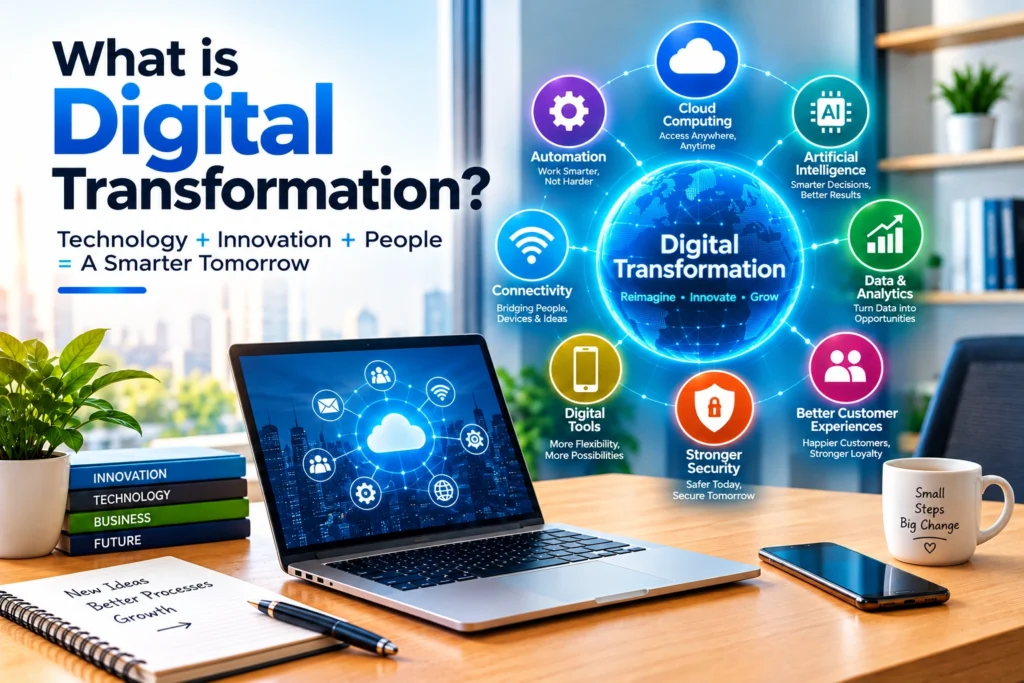
Digital transformation means rethinking how a business operates and delivers value by actually using digital technology. We’re talking about changes that touch everything—daily tasks, customer support decision-making, what you sell, and sometimes even your entire business model.
Let’s break it down.
What Is Digital Transformation?
To put it simply, digital transformation is when companies use digital technology to make their business run better, serve customers in new ways, and bring more value.
Here’s what that looks like in real life:
Imagine a small clothing shop that only took orders in person. One day, the owner launches a website, starts selling online, adds digital payments, tracks stock with software, and answers customer questions through email or messaging apps.
That shop didn’t just stick up a website. The entire way it does business has changed.
That’s digital transformation.
Does it need to be a giant overhaul? Nope. Sometimes a small tweak can make all the difference.
Why Does Digital Transformation Matter?
Because people expect more now.
We’re used to searching for answers instantly. If a website is glitchy, checkout is a hassle, or nobody picks up the phone, we move on.
Business owners see this every day.
The right digital tools step in to speed up service, cut busywork, help companies understand what customers want, and stay relevant in a fast-moving market.
And it’s not just about customers—employees benefit, too.
Instead of wasting hours copying and pasting data or digging through filing cabinets, they use digital systems to do things faster (and with fewer headaches).
All those little improvements add up.
It’s About More Than Just Tech
Here’s where a lot of businesses mess up: they think digital transformation is just buying more tech.
But you can pour money into fancy software and still wind up with the same old problems if your core processes don’t change.
Three things matter most:
- People who get and use the new systems
- Processes that actually improve, not just move onto screens
- Technology that supports what the business genuinely needs
Picture a restaurant with an online ordering app—but the kitchen is still clinging to an ancient paper process. Customers might order faster, but staff are doing double the work. The tech is there, but real transformation hasn’t happened.
Popular Digital Tools in Transformation
Digital transformation isn’t a checklist, but certain tools pop up over and over.
Cloud Computing
Cloud computing lets teams use software, storage, and resources over the internet instead of being chained to one office computer. This is a lifesaver for remote and hybrid work.
Artificial Intelligence (AI)
AI is everywhere now—from customer service chats, to crunching data, to spotting fraud or automating routine tasks. An online shop might use AI to recommend products based on your browsing habits.
Data Analytics
Businesses collect mountains of info: sales, website clicks, how people use their app. Data analytics turns all that noise into useful answers, so you don’t have to guess what customers want—you can actually see it.
Mobile Tech
Phones changed everything. Now people do almost everything—shop, pay, chat—on their mobiles. That’s why businesses roll out apps, mobile-friendly sites, and other tools just for your phone.
Automation
Nobody enjoys endless copy-paste. Automation takes over repetitive duties—think sending emails, producing reports, updating records, or reminders for customers—so people can focus on creative work.
Real-World Examples
You bump into digital transformation all the time.
Banking is a perfect example—remember when you had to visit a branch for every little thing? Now apps let you pay bills, move money, and check balances anytime, anywhere.
Retail shops add online stores, use digital inventories, and set up automated order notifications. Suddenly, they’re serving customers in-person or online without missing a beat.
Healthcare has jumped in, too. Appointment booking, virtual visits, digital records—patients and providers all benefit from the switch.
And you’ll see the same trends in schools, factories, shipping, real estate, and more.
Benefits of Digital Transformation
A better customer experience
People want things to be easy. When it’s simple to buy, find help, and get stuff done, everyone’s happier.
More productivity
Right tools mean employees actually get more done. Automation handles boring parts, freeing people up for thoughtful work.
Faster, smarter decisions
Good data gives managers a crystal clear picture of what’s working—and what’s going sideways.
Lower costs
Digital systems slice through paperwork and time-wasting processes. That means less money wasted, and savings grow over time.
More flexibility
With digital systems, businesses can adapt faster. Launch a new service? Not a problem. Change up the workflow? Done.
What Are the Challenges?
Sounds perfect—so why isn’t everyone there yet?
Money is a big one. Buying new systems, training people, keeping data safe—it adds up.
Then there’s pushback from people inside the company. Change is tough, especially if you’ve done things the same way for years. Solid training and honest communication help a lot.
Security matters, too. The more data goes online, the more you have to watch for cyber threats.
One more thing: picking the wrong tools. Just because a platform is trendy doesn’t mean it’s right for your business.
Digital Transformation vs. Digitization
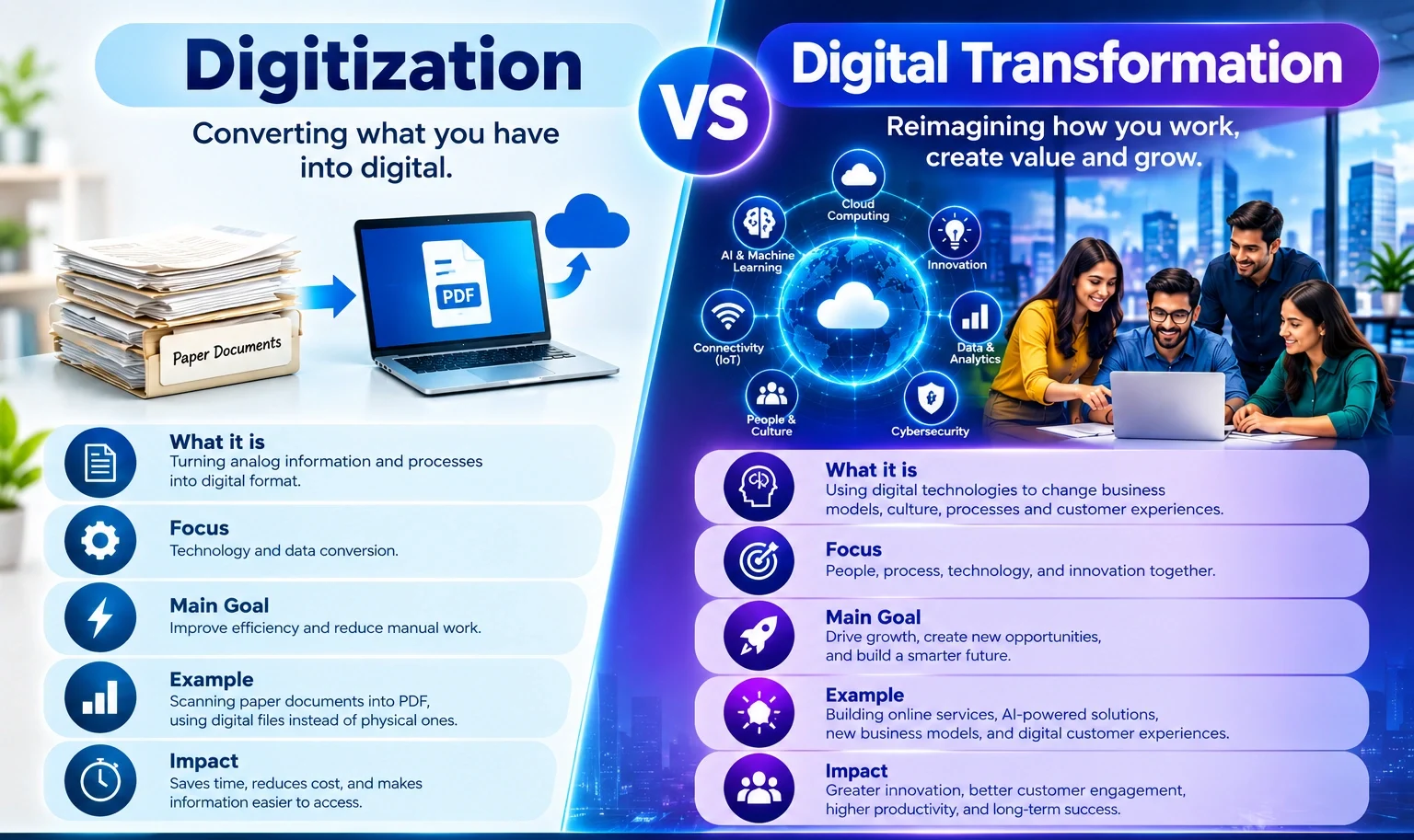
Easy to mix up, but they’re not the same.
Digitization is just converting something physical—like a document—to a digital format.
Digitalization means using digital tools to make your old processes better.
Digital transformation is bigger: you rethink and reshape your whole business around new technology.
Here’s a cheat sheet:
- Digitization = turning things digital
- Digitalization = streamlining with digital tools
- Digital transformation = reinventing the business with digital tech.
How Can a Business Start Digital Transformation?
You don’t need to flip the switch on everything at once.
Start by zeroing in on a real issue. Ask things like:
- Where are we wasting the most time?
- What annoys our customers?
- What’s begging to be automated?
- Where do mistakes keep cropping up?
- What info is tough to find?
- Which part of the customer’s journey feels behind the times?
Target one pain point, find a tool that addresses it, and see how the change works. Measure, tweak, expand. That’s the process.
Mistakes Businesses Should Avoid
Don’t buy tech just because everyone’s talking about it. Don’t overlook your team—the people using the new systems every day need to be involved. And don’t treat this as a one-and-done job. The market and technology never stop changing, and neither should you.
What Does the Future of Digital Transformation Look Like?
Digital transformation is speeding up, not slowing down. AI, automation, the cloud, data—they’ll keep shaping every industry.
But the winners won’t be the ones with the most tech—they’ll be the ones who know why they’re using it.
A simple, smart tool that solves a real problem always beats a complicated system that no one understands.
Final Words
Digital transformation is really just about working smarter, not harder—and connecting all the pieces: people, tools, strategy, and customer needs. So, if you’re thinking about shaking things up in your business, don’t start by asking, “What should we buy?”
Ask, “What problem are we trying to solve?”
Once you’ve got that answer, the rest falls into place.