
Look around for a second. Odds are something near you was designed on purpose — the label on your water bottle, an icon on your phone, even the font you’re reading right now. It’s everywhere, honestly, but nobody really stops to notice it.
Here’s the part people miss though: graphic design was never just about looking nice. It’s about getting a point across — a message, an offer, whatever a brand is trying to say — usually in the two or three seconds before someone loses interest.
So let’s get into it properly. What does graphic design actually mean, why do businesses spend so much money on it, and what does a designer even do all day?
What Is Graphic Design, Really?
Put simply, it’s the use of visuals to say something without needing a paragraph of text. Some people call it visual storytelling, and that’s not far off.
Designers work with things like:
- Colors
- Typography
- Images
- Shapes
- Icons
- Layouts
- Patterns
- Logos
The real job isn’t arranging pretty colors on a page. It’s making all these pieces work together so the final thing actually communicates something.
Here’s an example. A local restaurant wants to push a new dish. So a designer builds a post — a good food photo, short text, the restaurant’s usual colors, one clear offer. Nothing fancy. Looking good was never really the goal by itself. The real goal is stopping someone’s thumb mid-scroll, getting the message across before they move on, and maybe getting them through the door later that day.
That’s really the whole job, when you strip it down: visual communication.
Why Does Graphic Design Actually Matter?
Our brains just process visuals faster than text — that’s not really debatable at this point. Long before anyone reads a single word on a page, they’ve already picked up on the layout, the colors, the overall feel of it.
Which is exactly why design carries so much weight in business.
A company with solid design tends to:
- Look professional
- Build brand recognition
- Simplify complicated ideas
- Grab attention
- Communicate more clearly
- Stay visually consistent
- Make websites easier to use
- Push people toward taking action
On the flip side, bad design does real damage. A messy website, unreadable text, or a confusing ad can send people running before they even understand what’s being offered.
You’re Surrounded by Graphic Design (Even If You Don’t Notice)
You don’t need to work in a creative field to bump into design every day.
Think about your morning — checking your phone, opening an email, glancing at a cereal box, browsing a website, catching an ad on your commute. Design is baked into almost all of it.
| Everyday Example | How Graphic Design Helps |
| Product packaging | Makes the product recognizable and appealing |
| Website | Organizes information and shapes the visual experience, the way a professionally built website from Digital Web Sol does |
| Social media post | Catches the eye instantly and delivers the message before anyone scrolls past |
| Business card | Presents contact info in a professional way |
| Advertisement | Communicates an offer clearly |
| Logo | Makes a brand instantly recognizable |
| Poster | Shares info in a visually digestible way |
So really, graphic design goes way beyond just “making a logo” or “designing a poster.”
The Many Faces of Graphic Design
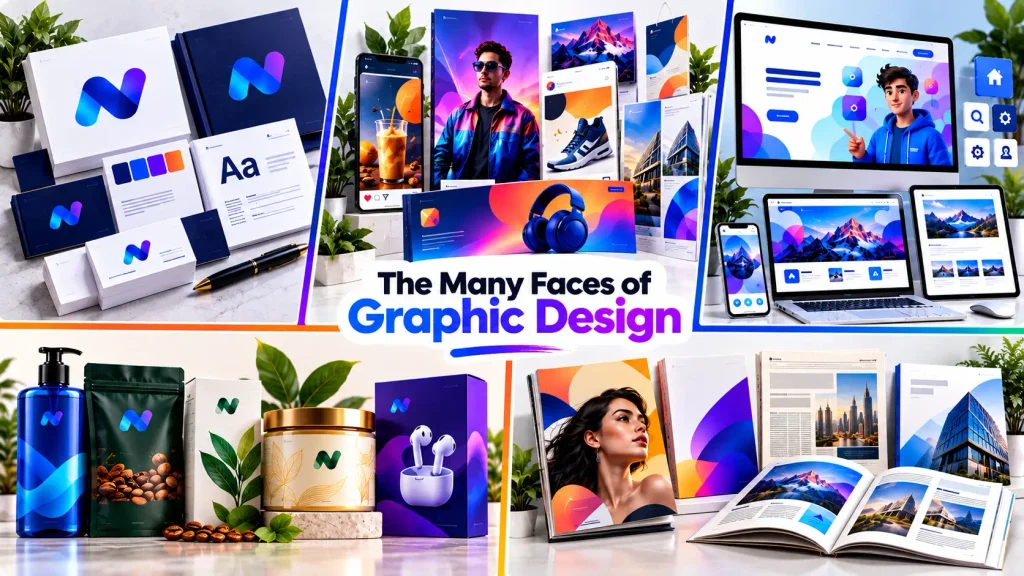
Graphic design isn’t one single skill — it branches into several specialties.
Branding and Visual Identity
This is all about how a company presents itself visually. It covers:
- Logos
- Brand colors
- Typography
- Business cards
- Brand guidelines
- Marketing collateral
A strong, consistent identity is what makes people recognize a brand no matter where they see it.
Marketing and Advertising Design
This category exists to promote something — a product, service, campaign, or event. Think:
- Social media graphics
- Digital ads
- Email visuals
- Posters and flyers
- Brochures
- Promo banners
The whole point is grabbing attention and getting a message to land.
Web and Digital Design
Designers also build visual assets specifically for online use — banners, icons, landing page graphics, blog visuals, digital illustrations. This work requires balancing how something looks with how it actually functions.
Packaging Design
This is what makes a product pop on a shelf or in an online listing. Shape, color, typography, product info, and brand identity all need to work together — and still stay legible.
Publication Design
Books, magazines, newspapers, reports, brochures — all of it needs thoughtful design. Typography, spacing, and layout hierarchy are what make dense information actually readable.
Graphic Design vs. Web Design vs. UI vs. UX
People mix these up constantly, and honestly, it’s understandable — they overlap a lot. Still, each one is pulling in a slightly different direction.
| Feature | Graphic Design | Web Design | UI Design | UX Design |
| Primary Focus | Visual communication and branding | Website look and structure | Digital interface elements | Overall user experience |
| Main Elements | Graphics, typography, colors | Layout, content, visuals | Buttons, screens, menus | Research, usability, user journeys |
| Common Work | Logos, ads, posters | Full websites and pages | Apps and interfaces | User flows and interactions |
| Main Goal | Communicate visually | Present info online | Make interfaces usable | Make the whole experience smoother |
Big digital projects usually pull in several of these roles at once.
How Designers Collaborate With Other Teams
Designers almost never work alone in a corner somewhere. Most of the time they’re going back and forth with marketers, developers, writers, sometimes even the business owner directly.
Marketing & Sales
This is where a lot of the day-to-day happens — ads, campaign visuals, social posts, slide decks. And sales teams lean on this stuff more than people realize. A good pitch deck or a clean case study can genuinely be the difference in closing a deal.
Product & UI/UX Teams
When there’s an app or a website being built, designers usually end up working next to UI/UX people too — bringing in icons, illustrations, and branded visuals so the whole product feels like it belongs together instead of looking bolted on.
Business & Leadership
And then there’s the part people don’t think about: designers have to actually defend their choices. Why this color, why this layout, how does it connect to what the business is trying to achieve. It’s not just a creative role at that point — it’s half a communication job.
What Does a Graphic Designer Actually Do?
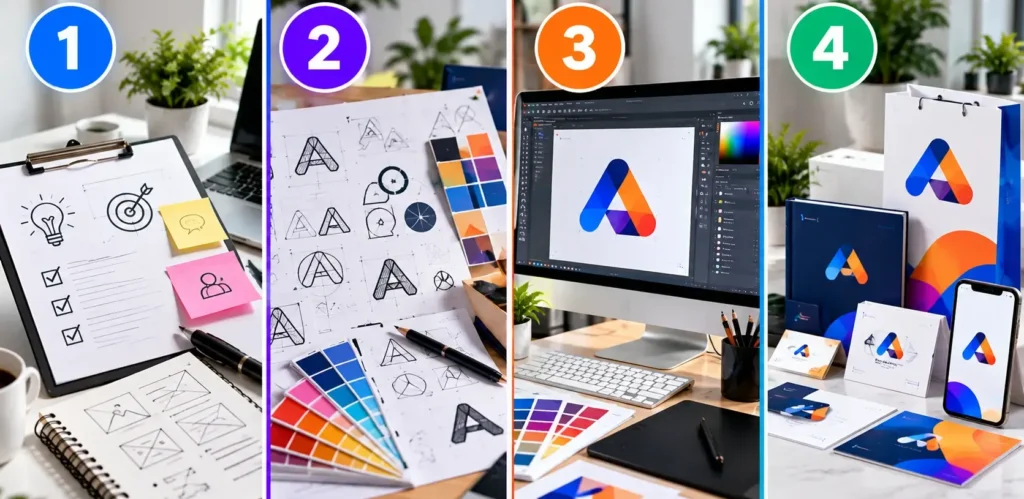
Honestly, it depends on the day. One project might be a logo, the next could be a website banner, a slide deck, packaging, or a full ad campaign.
Most projects follow a similar flow though:
1. Getting the Brief
First, the designer needs to understand the goal. Who’s the audience? What’s the core message? Where will this design actually show up? And once someone sees it — what’s the action we’re hoping they take?
2. Doing the Research
Before touching any design software, good designers look into the audience, competitors, current trends, and the existing brand.
3. Exploring Ideas
This is the brainstorming stage — sketches, mood boards, rough layouts, font pairings, color palettes. Nothing’s locked in yet.
4. Building the Design
Once a direction feels right, the designer builds it out properly using whatever software fits the job.
5. Refining Based on Feedback
Almost nothing gets approved on the first try. Getting a few rounds of changes is just how the process works, not a sign something went sideways.
Where Is Graphic Design Actually Used?
Honestly, there’s barely an industry that doesn’t touch design in some way.
Branding
Logos, colors, fonts, guidelines — basically everything that keeps a company looking like itself across every platform.
Marketing and Advertising
Ads, email graphics, billboards, brochures — anything meant to grab attention and persuade.
Websites and Digital Platforms
Graphics, icons, and layouts that shape how visitors interact with a site.
Social Media
One of the biggest playgrounds for design — used for announcements, promos, product launches, and educational content.
Presentations and Business Docs
Pitch decks, reports, proposals, infographics — all easier to digest with solid design behind them.
Why It Matters So Much for Businesses
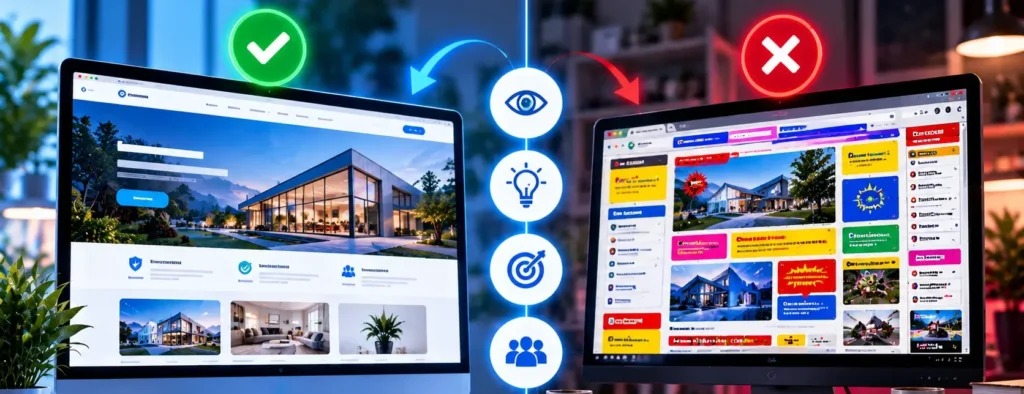
Picture two businesses selling nearly identical services. One has a clean site, consistent branding, and sharp visuals. The other’s got mismatched fonts, low-quality images, and a cluttered layout.
Even if the actual service is the same, people will form very different first impressions — and that difference can decide who they trust more.
Here’s a good example of this in action. Two businesses might rank right next to each other on the same SERP, offering the exact same service. But the one with a clean thumbnail, a recognizable logo, or a properly branded favicon almost always gets clicked first. Nobody’s read a single word yet — design alone is already deciding who wins that click.
That said, design shouldn’t just be decoration. A gorgeous design that confuses people is still a bad design. The best work manages to hit all four at once — good looks, clear communication, real purpose, and easy usability.
Core Principles Behind Good Design
Contrast — this is basically what makes something jump out at you. Put dark text on a light background and it’s readable instantly. Put it on something close to the same shade, and people squint.
Alignment — sounds boring, matters a lot. Nothing screams “amateur” faster than text and images that don’t line up right.
Balance — you don’t want one corner of a design feeling heavy while the rest sits empty. Symmetrical or not, it needs to feel settled.
Hierarchy — this is what creates visual hierarchy in a design, telling your eyes where to go first. Big headline, then the subheading, then the smaller text everyone skims anyway.
Consistency — same fonts, same colors, same spacing rules, every single time. This is what makes a brand feel like a brand instead of five random designs stitched together.
White Space — people assume empty space is wasted space, but it’s the opposite. Give a design room to breathe and suddenly the important stuff actually stands out.
Skills That Actually Matter
Creativity gets your foot in the door, sure. But it runs out fast if that’s all you’ve got. The designers who actually last also bring:
- Idea generation
- Typography know-how
- Color theory
- Layout and composition sense
- Communication skills
- Attention to detail
- Problem-solving
- Understanding of the target audience
- Basic marketing sense
- Willingness to take feedback and adjust
Tech keeps shifting, but these fundamentals stay relevant because design is really about solving communication problems.
Design and Technology Today
Technology has completely changed how design work gets done — remote collaboration, instant feedback, digital delivery, the whole thing.
That includes AI these days too. It can help with brainstorming, generating images, or handling repetitive tasks. But AI still doesn’t understand a brand’s personality, audience, or business goals the way a human does — which is why human judgment still drives the process.
Common Mistakes to Avoid
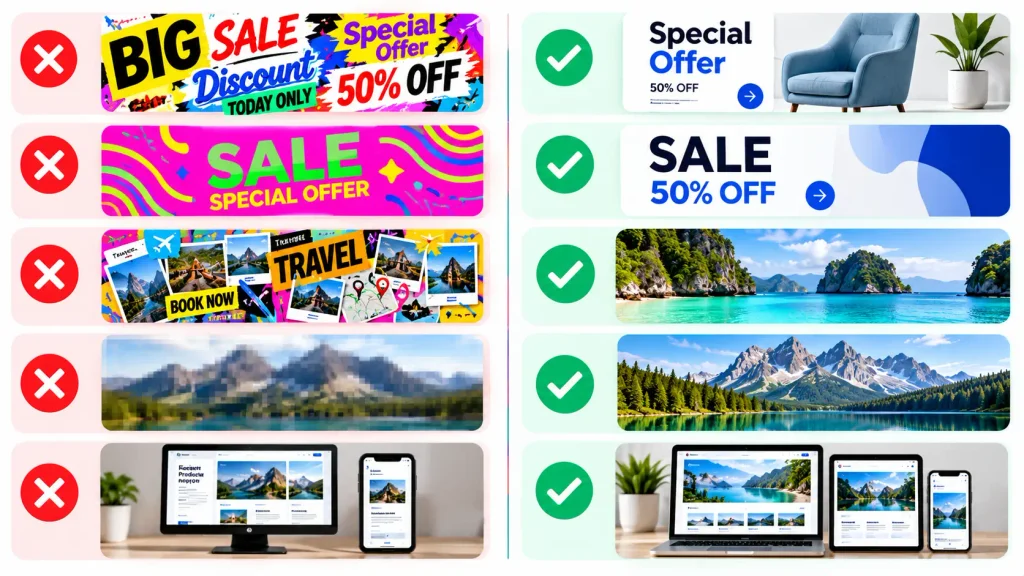
More isn’t always better. Some frequent slip-ups:
- Using too many fonts at once
- Picking hard-to-read color combos
- Cramming every inch of space
- Relying on low-quality images
- Forgetting mobile users
- Burying important info
- Inconsistent branding across platforms
- Designing without thinking about the actual audience
A clean, simple design usually beats an overloaded one — every time.
Frequently Asked Questions
Is graphic design just about making things look nice?
Not really. It’s mainly about communication. Looks matter, sure, but the real goal is helping people understand something or take action.
Does it matter for small businesses too?
Yeah, honestly maybe even more. A small business still needs a logo, some social posts, an ad here and there, maybe a website. Without some consistency across all that, nobody remembers who you are.
How is graphic design different from web design?
Graphic design is the bigger umbrella — it’s about communicating visually, period. Web design is narrower, focused just on how a site looks and works. They cross over a lot, but they’re not really the same job.
Is graphic design used in social media?
All the time. Probably more than anywhere else at this point — promos, quick educational posts, announcements, you name it.
Is coding knowledge necessary for graphic designers?
Not really, no. It’s not expected. Though if you’re doing digital work, knowing the basics of how the web works doesn’t hurt.
Can AI take over graphic design jobs?
It can help with pieces of it, sure. But design isn’t just output — it’s understanding a brand, an audience, a context that AI doesn’t actually grasp. Most designers are just folding these tools into how they work rather than getting replaced by them.
Conclusion
Graphic design goes way beyond color choices and pretty images — it’s really about turning ideas into something people can see, understand, and remember.
From a logo to a website, a social post to a product package, design shapes how people experience a message. And the best design work always balances creativity with purpose — keeping the audience, the message, and the intended action all in mind.
Whether you’re running a small business, launching a website, or just trying to get an idea across clearly, understanding these design basics can genuinely help you make smarter visual decisions.