

Ask a marketer how they get a business found online and “SEO” will come up within seconds. Keywords, backlinks, page speed, rankings on Google. For years that was a perfectly good answer.
But pause for a second and recall the last time you actually needed to find something online. Did you really start with Google every time? Maybe you typed a laptop model into YouTube to watch a review. Maybe you searched a café on Instagram, or opened Amazon directly to buy a phone charger, or added “reddit” to a query because you wanted honest opinions instead of polished ones. Plenty of people now just ask an AI assistant and never see a results page at all.
That change in habit is why a newer term keeps showing up in marketing circles: SCO. So what is SCO in digital marketing, and how is it different from the SEO you already know?
What Is SCO in Digital Marketing?
SCO usually stands for Search Channel Optimization. The idea is to make your brand, content, and products easy to find on every platform where your audience actually searches, not only on Google or Bing.
Classic SEO stays focused almost entirely on websites and how they rank in search engines. SCO steps back and asks a more basic question: where do my customers look for answers? One company’s customers might mainly show up through Google and LinkedIn. For another it could be TikTok, Pinterest, and Amazon. Others might need YouTube, app stores, or Reddit threads.
Here’s a quick example. Say you sell home fitness equipment. Writing a page that targets “best home gym equipment” and getting it to rank on Google is SEO. Recording a YouTube video on how to pick equipment for a small room, polishing your marketplace listings, and posting short workout tips on social media, all so people can find you wherever they happen to be searching, is closer to SCO.
So SCO is less about pleasing one algorithm and more about understanding how your audience moves from “I wonder about this” to “I’ll buy from these people.”
Why SCO Has Become a Talking Point
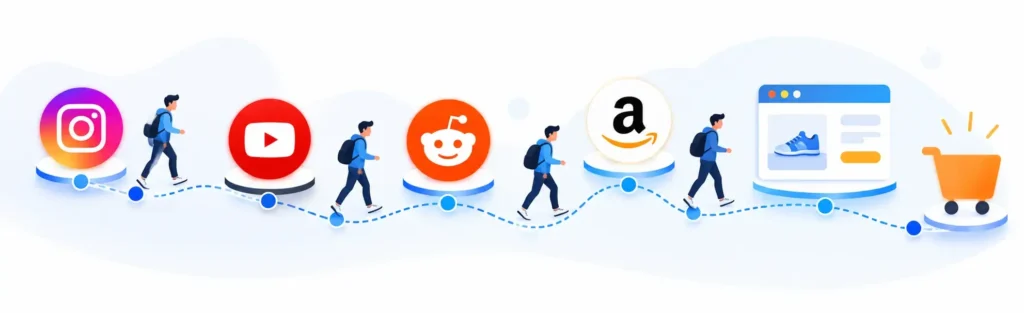
A few years back the typical journey was simple. Someone had a question, opened Google, clicked a result, and read a page.
Today that same person might spot a product on Instagram, check a review on YouTube, scroll a Reddit thread to see if anyone complains about it, compare prices on Amazon, and only then land on the company’s website. Four or five platforms, one purchase.
If you’ve put all your effort into a single channel, you can end up with a beautifully optimized website that nobody meets until the very last step, or never. The customer had already formed an opinion somewhere else.
SCO is a response to that. Instead of only asking “how do I rank this page?”, you start asking things like:
- Where does my audience really search?
- What kind of content does each platform favor?
- What questions do people ask there? Most people stop at keyword research and never plan what actually comes next.
- Would a video, a short post, or a long article serve them better?
None of this makes SEO obsolete. It just widens the frame.
SCO vs SEO: What Is the Difference?
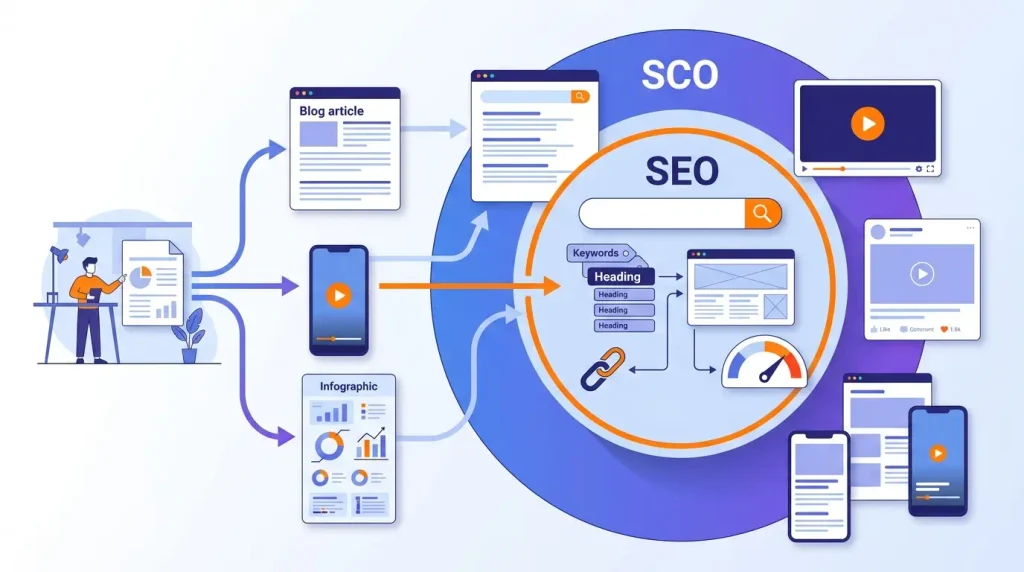
The two are closely related, and honestly they overlap a lot. SEO (Search Engine Optimization) is about improving how visible your website is in search engine results. SCO (Search Channel Optimization) covers the wider set of channels, and SEO sits inside it as one major piece.
Suppose you publish a blog post and tune its title, headings, keywords, internal links, and loading speed. That’s SEO. Now suppose you turn the same research into a YouTube walkthrough, a short social clip, and an infographic. You’re now working in SCO territory.
Here’s a quick side-by-side look at how the two stack up:
| SEO | SCO |
| Focuses mainly on search engines | Focuses on multiple search and discovery channels |
| Often centered on website visibility | Looks at overall brand discoverability |
| Relies on keywords and on-page optimization | Relies on channel-specific optimization |
| Aims for organic search visibility | Aims for visibility across relevant platforms |
| Website content is the core asset | Several content formats can be involved |
| Google and other search engines matter most | Search engines, social, video, and marketplaces may all count |
Don’t read this table as a fight. For most businesses the two work together rather than compete.
How Does SCO Work?
There’s no universal formula. Every platform has its own users, formats, and ways of deciding what to show. Still, most SCO work follows a similar path.
Start by Finding Where Your Audience Searches
Before creating anything, work out where your customers look. A software company may find that its buyers live on Google and YouTube. A fashion brand might get more traction from Instagram, TikTok, and Pinterest. A B2B service could care most about Google and LinkedIn.
There’s no need to have a presence everywhere simply because a platform exists. Pick the ones that match your audience and your capacity.
Understand Search Intent
Knowing what people type is useful. Knowing the search intent behind it the actual “why” is better. A person typing “what is web hosting” is simply looking for a basic explanation. Someone searching “best web hosting for small business” is comparing options. Someone typing a specific company name has probably almost decided.
The same logic applies off Google. Think about YouTube for a second. If someone types in “how to build a WordPress site,” they want to watch it happen. They’re not hoping for a 2,000-word essay. TikTok is even blunter. People scrolling there want one quick SEO tip they can use today, and that’s it.
Make your content fit the platform
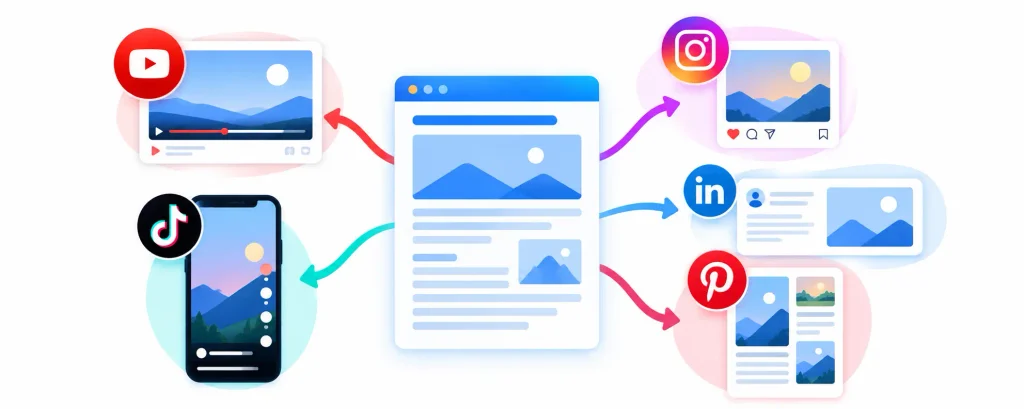
One mistake I see all the time is posting the exact same thing everywhere. A detailed article can be great on your blog and still make a really awkward social caption. A better move is to take one long tutorial, turn it into a YouTube video, cut a few short clips from it, and finish with a simple checklist. The information stays the same. You’re just changing how it’s packaged.
Optimize Within Each Channel
Here’s the thing: what works on your website won’t necessarily work anywhere else. Say you run a blog. You’ll spend your time fixing titles, adding internal links, and making the site load faster. Move over to YouTube and suddenly none of that matters much. What counts is whether someone clicks your video and actually keeps watching. Social platforms are different again, since they care more about how a post is formatted and whether people react to it. And if you sell on a marketplace? Your product photos and customer reviews will do more for you than any keyword. That’s why one SEO checklist can’t be your whole plan.
Measure and Adjust

SCO doesn’t mean posting everywhere and hoping.Next, work out which channels are actually paying off, whether that means traffic, leads, sales, or just decent engagement. Google might send you most of your visitors, while YouTube sends far fewer but much more serious ones. Let the numbers tell you where your time should go. Another business might find that social search drives most product discovery. Let the numbers tell you where to spend more time.
A Practical Example
Picture a small web design agency. Its SEO plan might include a post called “How Much Does a Website Cost?” aimed at relevant Google searches.
A wider SCO plan would take that same topic and spread it out:
- Publish the full guide on the agency’s website
- Record a YouTube video explaining typical costs
- Share quick pricing tips as short social posts
- Design a visual comparison for Pinterest
- Answer related questions in communities, where it’s appropriate
- Keep business profiles and listings accurate and complete
The subject never changes. Only the format and the location do. That’s really the whole idea behind Search Channel Optimization.
Is SCO a Replacement for SEO?
No, and it’s worth being clear about that. If your business depends on Google traffic, SEO still matters a great deal. You still need helpful content, a technically healthy site, sensible structure, relevant keywords, and a good user experience.
SCO simply reminds you to look past the website. You could sum up the difference like this: SEO asks how your site can become more visible in search engines, while SCO asks where your audience searches and how your brand can turn up there. Both questions deserve an answer.
Benefits of an SCO Strategy
Wider visibility. Put everything on one channel and a single algorithm update can hit you hard. Show up in a few places and people have more ways to stumble across you.
Better reach. Some people like reading, others prefer video, and plenty just want a quick clip. Cover different formats and you can meet people on their terms.
More from the same research. A single solid piece of research can become an article, a video, an infographic, a checklist, and an FAQ. That saves a lot of effort, as long as you adapt each piece to its format rather than copying and pasting.
Stronger brand recall. Hardly anyone buys after one encounter. Someone might watch your video, spot one of your posts a week later, and then Google your name. Every touchpoint makes the next one feel a little more familiar.
Common SCO Mistakes to Avoid
The biggest one is spreading yourself too thin. Being “everywhere” sounds impressive, but if your audience doesn’t use a platform, the hours you spend there are wasted.
The second is publishing identical content on every channel. A blog post, a YouTube video, and a social post have different jobs, and they shouldn’t look the same.
The third is chasing algorithms instead of helping people. Good optimization is meant to strengthen strong content, not replace the need for it. A page or video that clearly answers a real question has a far better foundation than something built purely to game rankings or engagement.
How to Build a Simple SCO Strategy
You don’t need a big team. Start with three questions.
Where does my audience search? Write down only the platforms that genuinely matter to your customers.
What are they looking for? Collect their questions, problems, and comparisons.
Which format works best on each platform? Then shape what you know to suit it. One topic could become:
- Website: a detailed guide
- YouTube: a step-by-step tutorial
- Instagram: short tips or a visual summary
- TikTok: a quick explanation
- LinkedIn: a professional take or discussion
The point isn’t to post everywhere. It’s to make useful information easier to find.
SCO and SEO Work Better Together
It’s tempting to run them as two separate projects, but that only makes things messier. Your SEO research already tells you plenty. Keyword data shows what people want to know. Search results reveal the questions that keep coming up. Competitor pages point to the topics getting attention, and your analytics show which pages actually bring in visitors. You can put all of this same information to use when planning content for your other channels.
Seen this way, SEO isn’t SCO’s rival. It’s the foundation SCO is built on.
Frequently Asked Questions
What does SCO stand for in digital marketing?
Search Channel Optimization. Ask ten marketers and you’ll get slightly different answers, but most mean the same thing: making sure customers can find you wherever they search, not only on Google.
Is SCO the same as SEO?
Not quite. SEO’s focus is on improving your website’s ranking within search engines specifically. SCO has a wider reach and covers any place where people search or discover information.
Is SEO part of SCO?
Pretty much, yes. If you’ve already done proper SEO, you’ve done the hardest part, because your keyword research and content can be reused on YouTube or Pinterest with a few tweaks. Just watch the acronym, though. Some people use SCO for Social Channel Optimization, which is a different thing.
Does SCO include social media?
It can. Social platforms increasingly work as search tools, so they belong in your strategy when your audience uses them. Some marketers also use SCO to mean Social Channel Optimization, which is a different meaning of the same letters.
Does SCO replace traditional SEO?
No. If organic website traffic matters to your business, you still need SEO. SCO just widens the view of where customers might discover you.
Conclusion
There was a time when SEO alone was all a business really needed. These days it’s only half the picture. People still search on Google, of course, but they also search on YouTube, Amazon, TikTok and a dozen other places. SCO simply means showing up on the ones your customers actually use. The earlier you start, the sooner people begin to recognize your name, and that’s usually when more of those visits turn into real leads. Wait too long, and a competitor will already be sitting in that spot.
Keep doing SEO, though. It’s the base everything else grows from. SCO just adds to it. If you’d like help working out where to start, have a look at our SEO service plans. Whatever the size of your business, we can help you figure out which channels genuinely deserve your effort.